

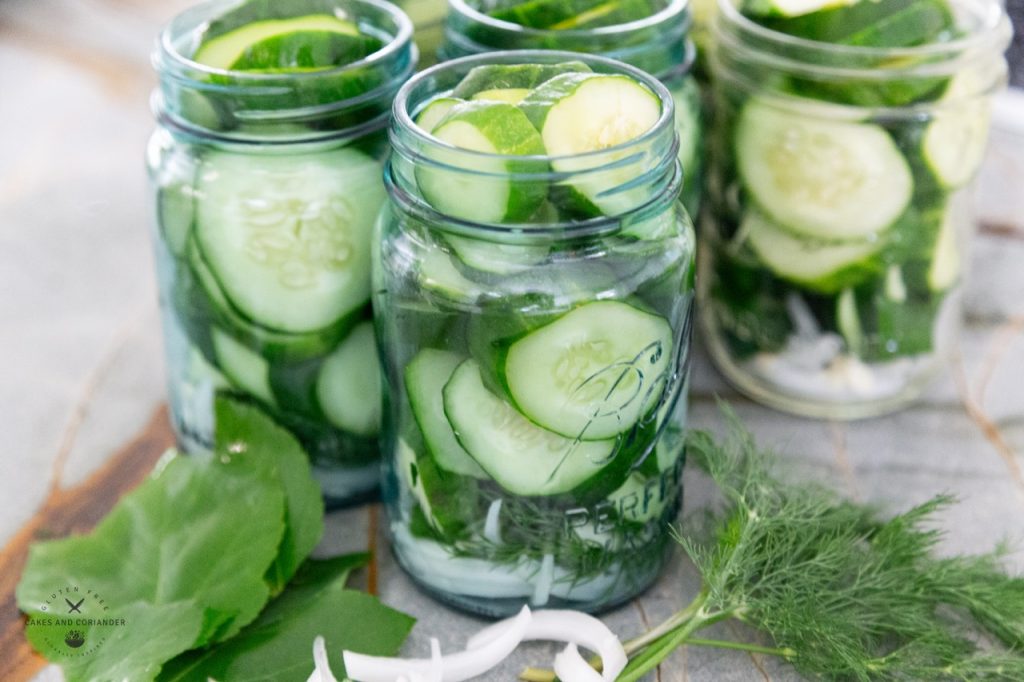
Love dill pickles but don’t want the hassle of canning? These easy homemade refrigerator dill pickles are the perfect solution. They’re bright, crisp, and bursting with flavor, using just a few simple ingredients. Whether you’re looking for a gluten-free pickle recipe for your next BBQ or just craving a crunchy snack, this quick and easy method delivers delicious results in under 48 hours.
I absolutely love pickles—all types of pickles—but dill pickles are near the top of my list. In many instances, I find that pickles can get overburdened by vinegar. While a strong vinegar flavor works well in some cases, like Maille’s Gherkin pickles for charcuterie, I prefer my everyday dill pickles to showcase their full flavor and freshness.
When I created this recipe, my main inspiration came from a famous Chicago staple, The Billy Goat Tavern. Many of you probably know about this spot—it’s so iconic that there’s even an old Saturday Night Live skit called “Olympia Restaurant” based on it! Billy Goat’s burgers are deliciously greasy, but the best part is the condiment bar with its wonderful fresh dill pickles. You might even look at my tray and ask if I’d like an extra cheeseburger to go with my pickles—they’re that good.

Refrigerator Vs Canned Dill Pickles
This dill pickle recipe is for refrigerator pickles. What’s the difference? At your local grocery store, you’ll find pickles in two (maybe three) separate areas. First, in the condiment aisle, you’ll find pickles that have been hot-packed (canned) to create a shelf-stable product. Second, in the refrigerated deli section, you’ll find pickles like Claussen, Bubbies, and Grillos—these are refrigerator pickles. They’re obviously not shelf-stable, but they do have a long fridge life. Keeping them refrigerated helps maintain a milder and crisper pickle. Canned pickles, on the other hand, are jarred and submerged in a boiling water bath for ten minutes, which essentially cooks the freshness out of them. You’re more than welcome to try canning this recipe, though I personally prefer them just the way they are.
Oh, and the third location for pickles? It’s usually on or near the deli counter. I’m talking about those giant, delicious Kosher pickles.
Cucumbers for Dill Pickles
It’s summer here, and whenever I visit the grocery store or a farmer’s market, it’s cucumbers galore! Usually, I find five varieties, but there are nearly 100 different types of cucumbers ranging in size, shape, color, flavor, and texture. In fact, my favorite seed and gardening company, Baker Creek Heirloom Seeds, offers 25 different cucumber seeds. It’s worth checking out just to see the range. But the main cucumber varieties you’ll generally find are English, Burpless, Persian, Lemon, and Kirby (or “Pickling”) Cucumbers.
English Cucumber
English cucumbers are wonderful for salads or just eating raw. You’ll recognize them by their dark green skin, and they’re usually wrapped in plastic at the grocery store. Their thin, tender skin allows for easy eating, but they’re too delicate for pickling.
Burpless Cucumber
Burpless cucumbers are the most typical variety found in grocery stores and gardens. They’re easy to grow, have a tougher protective skin, and are quite disease-resistant. The Burpless variety has also been bred to contain less cucurbitacin, a naturally occurring compound that can cause bitterness and indigestion. When smaller, they’re okay for pickling, but as they get larger, the tough skin isn’t desirable. Like English cucumbers, Burpless cucumbers are best for salads or veggie platters.
Persian Cucumber
Persian cucumbers are delightful little guys—crisp, fresh, and easy to eat due to their softer skin. They generally grow no larger than 5 or 6 inches, and like English cucumbers, they have a slightly sweet and mild flavor. These cucumbers work well for refrigerator pickles, though I’m not sure about canning. You can also enjoy them fresh or use them in this dill pickle recipe!
Lemon Cucumber
Lemon cucumbers are just plain fun. They legit look like their namesake and are great for adding a pop of color to a salad or platter. I haven’t tried pickling them, though I’ve heard it’s possible—I wouldn’t trust it, though.
Kirby “Pickling” Cucumber
And now, the star of the show: the Kirby “Pickling” Cucumber. These cucumbers generally grow between 3 and 7 inches in length and often have a slight arc. They have a medium skin that’s not too delicate for canning, nor too tough. Eaten raw, Kirby cucumbers have a nice crunch and great flavor. They’re also used when they’re “babies” and called Gherkins. Gherkins, being less ripe, can be a bit bitter when eaten raw, but they’re fantastic for pickling. These are usually my go-to for dill pickles.
Grape Leaves in Dill Pickles?
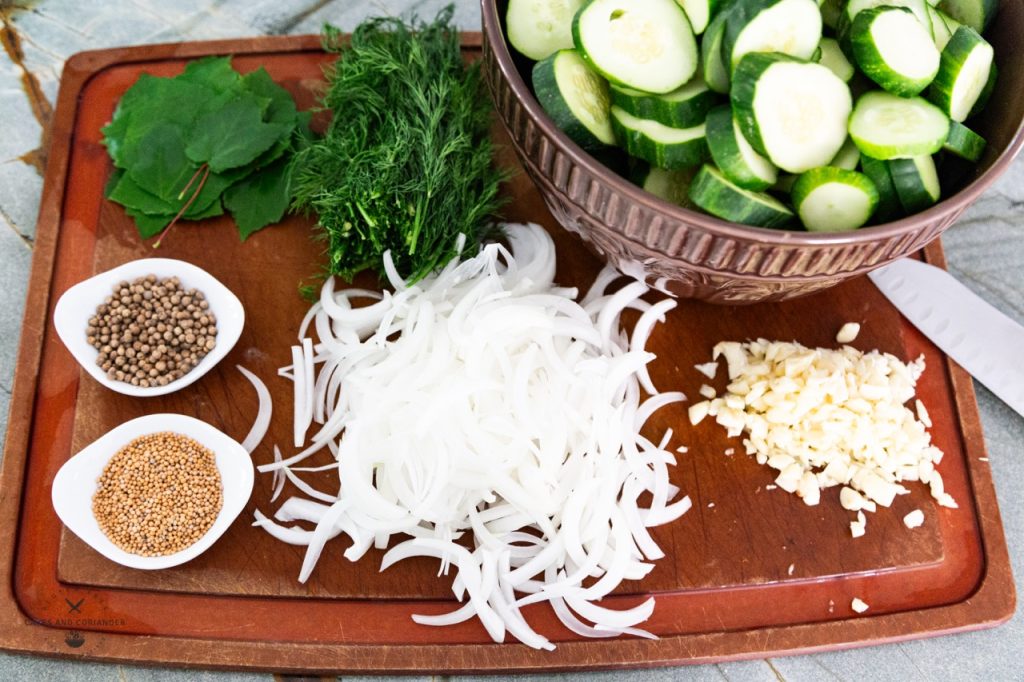
Yes, grape leaves are often found in dill pickles. Have you ever wondered why? Grape leaves help maintain the crispness of the dill pickle! Pre-industrialization, most pickle recipes included grape leaves to keep that fresh snap we all know and love. Over time, larger manufacturers switched to adding calcium chloride, also known in the industry as “Pickle Crisp.” Since calcium chloride is an inorganic substance and potentially toxic if ingested outright, I’ll stick with fresh grape leaves!
Funny enough, my grape leaves came from a vine randomly growing in my backyard. I’m told that Concord and wild grape leaves work best, but I’m sure any will do. I have a sneaking suspicion that no one is actually comparing Pinot, Gamay, or Grenache grape leaves to see which is best for pickling.
I meant to keep this post short, but I somehow managed to type away. On that note, happy pickling!

FAQs to Dill Pickles
Should I Use Grape Leaves for Making Pickles?
If you don’t have your own, can’t find wild grapes, or can’t borrow a few leaves from your neighbor’s vine, you can purchase them online. Halal International Shop, Fresh Market, or international grocery stores—they sometimes have them available.
If those options don’t work, you can replace the grape leaves with calcium chloride. You can purchase it through Amazon: Pure Calcium Chloride- Non GMO.
Which Jars are Best for Pickling?
I find the easiest way to store my pickles is in Mason jars. I recommend wide-mouth Ball Wide Mouth 16 oz Mason Jars.
How Long Should I Wait to Eat Pickles?
Let your pickles rest in the fridge for at least 24, if not 48 hours, to absorb the brine and start pickling. I tried them after 3, 6, 24 hours, and obviously more…
What Spices Are Used in Making Pickles?
I use mustard seed, coriander, and black pepper as my main spices. Feel free to add red pepper flakes for some heat or even a little allspice.
What Should I Serve Pickles With?
Perfect as a side for sandwiches, chopped into potato salads, or as a crunchy snack on their own
How Do I Store my Pickles?
These refrigerator pickles stay fresh for up to 2 months. Discard if you notice any off smells or mold.”

If You Like Dill Pickles, You Should Also Check Out These Recipes!


Easy Homemade Dill Pickles: Fresh, Crunchy, and Quick to Make
Ingredients
- 4.5 lbs Pickling Cucumbers- Cut into Slivers or Chips
- 2 Cups Sweet Onions- Slivered
- 1 Tbsp Coriander Seed
- 14 Fresh Grape Leaves
- 2 tsp Mustard Seeds
- 14 Sprigs Dill
- ⅓ Cup Fresh Garlic- Smashed and Roughly Chopped
- 5 Cups Water
- 3 Cups Distilled White Vinegar
- 4 Tbsp Granulated White Sugar
- ⅓ Cup Coarse Kosher Salt

Instructions
- Prepare Jars: Sterilize mason jars by washing with hot, soapy water and rinsing thoroughly.
- Prepare Ingredients: Cut your cucumbers, sweet onions, crush your fresh garlic, and split up your dill.
- Pack Jars: Evenly distribute onions, garlic, dill, and grape leaves among the jars. Tightly pack cucumber slices into each jar.
- Make Brine: In a medium saucepan, combine water, vinegar, sugar, salt, coriander seeds, and mustard seeds. Bring to a boil, then simmer for 2 minutes.
- Fill Jars: Carefully pour hot brine into each jar, leaving about ½ inch of headspace.
- Seal and Cool: Wipe rims, seal with lids, and let jars cool to room temperature.
- Refrigerate: Store jars in the refrigerator for at least 24 hours before enjoying. For best flavor, wait 48 hours.
- Storage: Refrigerated pickles will keep for up to 2 months.
I had them too. So good and crisp.
Pickles!
Had these at the house! So great, I’m glad you posted this recipe!