

This easy Peanut Butter Curry is creamy, flavorful, and incredibly versatile. Whether you’re serving it with rice, noodles, or piling it high with vegetables, this comforting dish is a guaranteed crowd-pleaser. Plus, it’s naturally gluten-free and easily made vegetarian or vegan!

How this dish came to be
Our Simple Rich and Delicious Peanut Butter Curry is a bit of fusion. When my wife told me she was in the mood for curry, I took stock of our vegetables, meats, and put my mind into gear. I had probably just made the boys’ school lunches and peanut butter was on my mind. Seeing the curry selection in our pantry, I decided to focus on a Rama style Thai curry.
What Is Peanut Butter Curry (Rama Curry)?
Peanut Butter Curry, also known as Swimming Rama or Praram Long Song, is a Thai-inspired dish that combines creamy peanut sauce with coconut milk. I think of it as comfort food. With familiar warm flavors, a little heat, and an essence of Asia, this dish just feels like home. Though widely popular in Thai restaurants across the U.S., often served over steamed broccoli and jasmine rice, it’s actually not a common dish in Thailand itself. Actually, during my visits to Thailand, I don’t recall once actually seeing it on the menu.
Traditionally made with pork or chicken, this curry can just as easily be made vegetarian or vegan by swapping in tofu or your favorite vegetables. If you’re using tofu, I recommend frying it first for added texture and flavor.
What Vegetables Work Best in Peanut Butter Curry?
Peanut Butter Curry is traditionally served over rice with green vegetables. Classic choices include spinach, watercress, broccoli, and water spinach (a leafy green from the Morning Glory family). Interestingly, while Thailand is primarily a Buddhist country, the name “Rama” in this dish originates from the Hindu god Rama, who is often depicted with green skin, perhaps a nod to the dish’s verdant toppings.
That said, we’re not sticklers for tradition around here, this peanut butter curry pairs beautifully with just about any vegetable you have on hand! In addition to the traditional greens, try bell peppers, snap peas, green beans, zucchini, eggplant, baby corn, bamboo shoots, or water chestnuts. It may sound like a lot, but don’t worry, you can mix and match based on what’s in your fridge or garden.
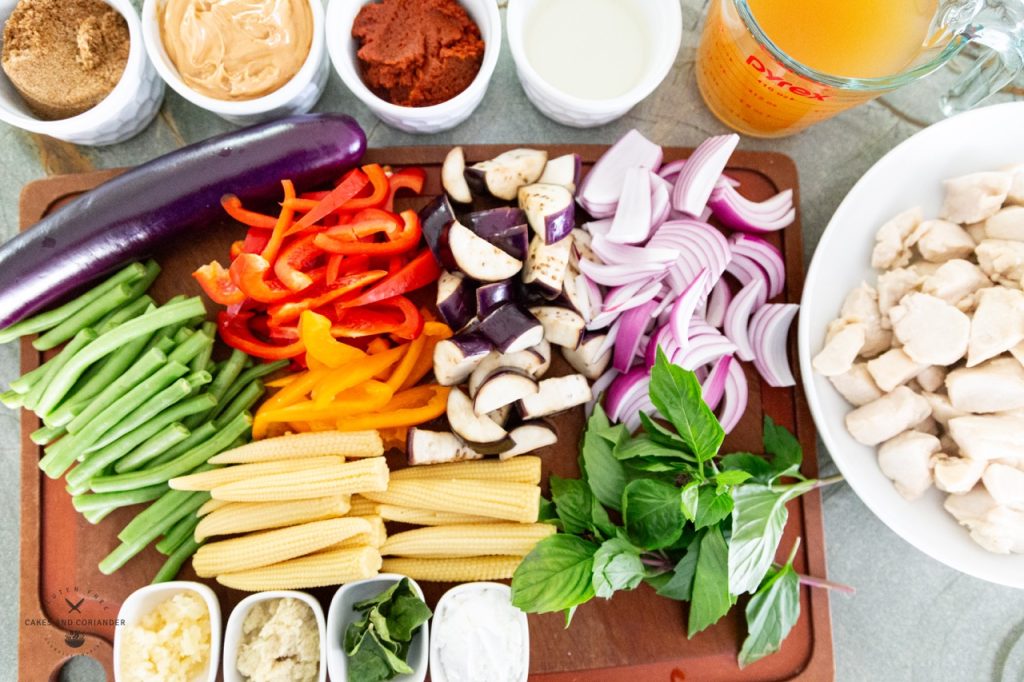
How to Make Peanut Butter Curry: Step-by-Step
As I mentioned, this Peanut Butter Curry recipe is simple and straightforward, perfect for a cozy weeknight meal. Here’s how to make it:
- Prep your ingredients. Chop your vegetables, measure your spices, and get everything ready to go.
- Season and brown the chicken. Salt your chicken, then heat a large Dutch oven over medium-high heat. Add avocado oil (or another high-heat oil) and brown the chicken pieces until golden.
- Sauté aromatics. Reduce the heat to medium-low. Add onions, garlic, ginger, and lemongrass paste or lime leaves, along with your curry paste or powder. Sauté just until fragrant, about 1–2 minutes.
- Add peanut butter and broth. Scoop the peanut butter into the pot and fold it into the chicken. In a measuring cup, whisk the cornstarch with a bit of chicken broth to make a slurry. Stir that into the pot along with the remaining broth and mirin. Let it simmer on medium-low for 5 minutes.
- Simmer with eggplant and basil. Stir in the brown sugar, Thai basil, and eggplant. Simmer for another 5 minutes, stirring occasionally.
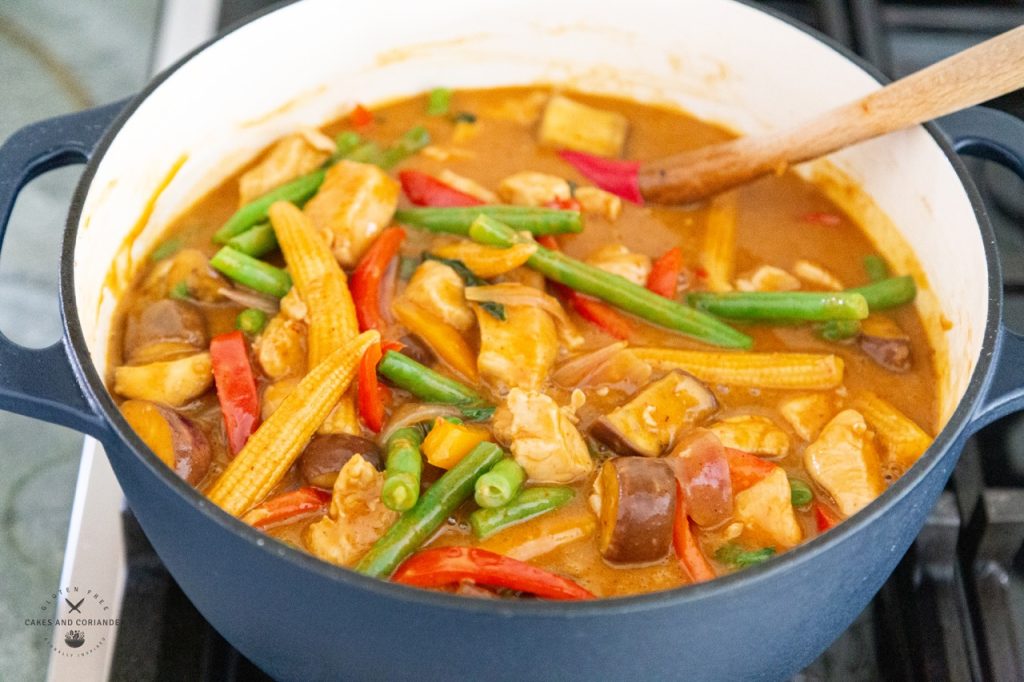
- Add remaining vegetables. Fold in your other vegetables, cover the pot, and simmer for 6–7 minutes on low heat until everything is tender.
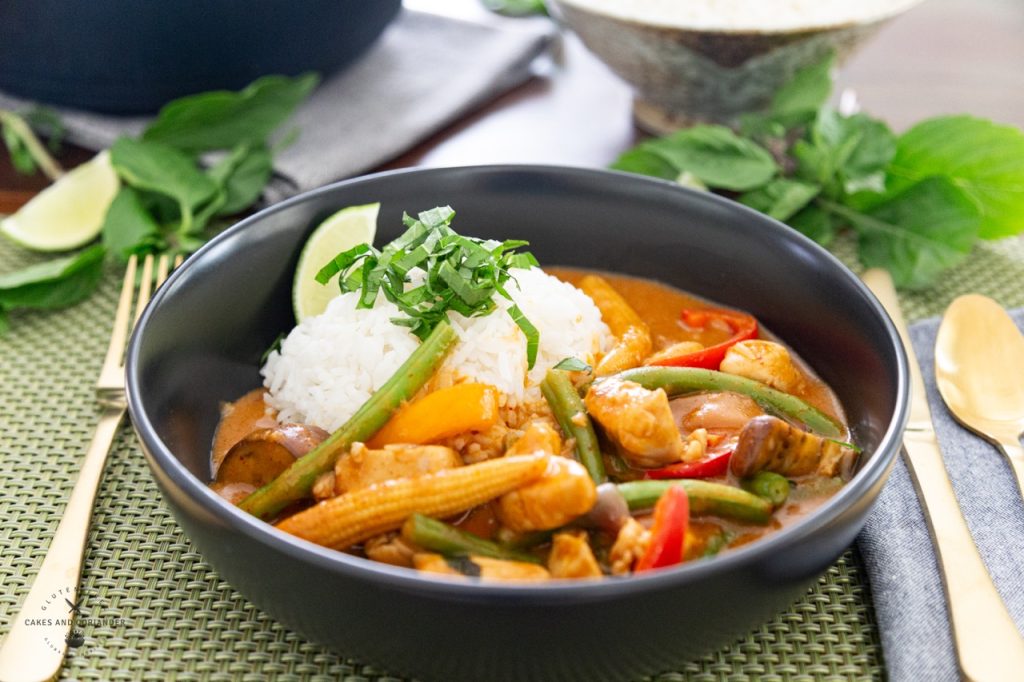
- Serve and enjoy. Turn off the heat and serve your peanut butter curry over jasmine rice or rice noodles. Garnish with extra Thai basil for a burst of fresh flavor.
Pro Tip: Time Your Rice
Jasmine rice typically takes 15–17 minutes to cook, so once you’ve prepped your curry ingredients, get the rice started. After bringing it to a simmer and covering it, it’s mostly hands-off, just like much of the curry. The entire cooking process for this dish takes under 25 minutes, and most of that is gentle simmering.
What Type of Curry Should I Use for Peanut Butter Curry?
For this recipe, my top pick is a red Panang curry paste, specifically, Maesri Thai Panang Curry Paste. It’s rich, deeply aromatic, and perfectly complements the peanut butter in this curry. But don’t worry if you can’t find it, you’ve got options!
Best Curry Substitutes
- No red curry paste? You can absolutely use yellow curry powder as a substitute. Start with 2 teaspoons and adjust to taste toward the end of cooking.
- Alternate Panang curry pastes available in stores:
- Mike’s Organic Curry Love – Available at Whole Foods and some Walmart stores.
- Thai Kitchen Red Curry Paste – Widely available in the Asian foods aisle of most grocery stores.
🔥 Tip: If you’re deciding between Thai Kitchen and Mike’s, go with Mike’s, it’s got a richer, more balanced flavor.
Where to Find Panang Curry Paste
If you don’t have an Asian grocery store nearby:
- Order online: Maesri Panang Curry Paste, or check out the Maesri Variety Pack if you’re a curry lover.
- Look in specialty or international aisles at larger grocery stores.
Kaffir Lime Leaf vs. Lemongrass: Which One to Use?
In traditional Panang curries and peanut-based Thai curries, Kaffir lime leaves (also known as Makrut lime leaves) are the most authentic and aromatic choice. Their citrusy, floral punch gives this dish its signature Southeast Asian flavor.
Substituting Lemongrass
Can’t find Kaffir lime leaves? No problem.
- Lemongrass with a touch of lime zest is a great backup. It won’t have the same depth, but still works well in a pinch.
Where to Buy Kaffir Lime Leaves
- Best option: Fresh Kaffir lime leaves (if you see them—grab them!)
- Next best: Frozen Kaffir lime leaves (commonly found in Asian grocery stores)
- Still great: Dried or powdered Kaffir lime leaves (available online or at spice shops)
🧠 Fun fact: Makrut lime isn’t just flavorful—it’s been used across Southeast Asia for its medicinal and household uses too!
Tips and Tricks for Making Rama Thai Peanut Butter Curry
Looking to customize your peanut butter curry? Here are some of my go-to tweaks and suggestions to make this dish your own, whether you want it richer, lighter, vegetarian, or extra spicy.
1. Add Coconut Milk for a Creamier Curry
While I’ve leaned into the bold peanut flavor in this version, traditional Rama curry recipes often include coconut milk. If you want that classic creamy texture, substitute 1 cup of chicken broth with 1 can of coconut milk. Add it at the same time as your final vegetables for best results.
2. Make It Vegetarian or Vegan
To make this recipe vegetarian or vegan:
- Swap the chicken broth for vegetable broth or even use a mix of broth and coconut milk.
- Skip the chicken and load up on vegetables.
- Add fried tofu near the end for a protein-packed plant-based twist.
3. Use Coconut Oil for Flavor Without the Richness
If you’re avoiding the extra calories of coconut milk but still want that tropical note, cook with virgin or unrefined coconut oil instead of avocado oil. It adds a subtle coconut aroma that ties beautifully into the dish.
4. Use the Right Cookware
I like to make this curry in a Dutch oven, this Amazon Basics Dutch Oven is my go-to, but you can also use a large, deep frying pan or a heavy-bottomed stockpot. Just make sure there’s enough room to stir everything comfortably.
5. Make It Ahead and Reheat with Ease
This dish is perfect for meal prep! Make it in advance and store it in the fridge:
- Reheat on low in a Dutch oven or saucepan for the best texture.
- Microwave-friendly tip: Add a tablespoon or two of water to your rice, cover it, and reheat in a microwave-safe bowl to re-steam it.
6. Turn Up the Heat
Want more kick? Add Thai chilies or a spoonful of chili paste to spice things up. The curry paste I use has a gentle heat, but if you’re the kind who loves to break a sweat while eating, go for it!
Here Are Some Other Fantastic Recipes To Try!

Simple Rich and Delicious Peanut Butter Curry
Ingredients
Peanut Butter Curry
- 3 lbs Chicken Breast or Thighs Sliced to bite sized pieces
- 2 Tbsp Fresh Grated Ginger
- 2 Tbsp Cornstarch
- 2 Tbsp Avocado Oil or other high heat oil
- 2 Cups Red Onion- Large Slivers
- 1 tsp Himalayan Pink Salt
- ½ Cup Mirin
- 3 Cups Chicken Broth
- 1 Tbsp Crushed Garlic
- ¼ Cup Red Curry Paste
- ¾ Cup Peanut Butter
- ⅓ Cup Brown Sugar
- ⅓ Cup Thai Basil- See Notes If You Don’t Have Thai Basil
- 2 Cups Sliced Sweet Peppers I don’t specify Bell Peppers, as there are many varieties that work well
- 6 Kaffir Lime Leaves or 1 Tbsp Lemongrass Paste
- 1-1/2 Cup Green Beans
- 1 Can Bamboo Shoots
- 1 15 oz Can Baby Corn
- 2 Cups Eggplant- Sliced/Salted/Rinsed
- 1-1/2 Cup Fresh Green Beans
Accompaniments:
- Jasmine Rice-Steamed/Cooked Please salt your rice, it tastes better!
- Cooked Rice Noodles
- 2 Tbsp Thai Basil- Slivered
Optional/Substitutions:
- Broccoli Crowns
- Spinach
- Watercress
- Peas
- Carrots
- Fried Tofu

Instructions
Peanut Butter Curry
- Prep and cut your ingredients.

- Salt your chicken. In a large Dutch Oven on medium high heat, brown the chicken with avocado oil (or another high heat oil) approximately 4-5 minutes.
- Reduce the heat to medium/low. Add the onions along with the other spices/aromatics. This includes ginger, garlic, lemongrass paste or lime leaves, and the curry. Let it meld for just a minute or two.
- Scoop the peanut butter on top and fold it into the chicken. In a measuring cup, mix together just enough chicken broth with the cornstarch to make a slurry and combine that with the rest of the broth and mirin into the pot. Stir and let it simmer for 5 minutes on medium low heat.
- Add your brown sugar, eggplant and Thai basil. Simmer for another 5 minutes stirring occasionally.
- Add the rest of your vegetables, fold them into the peanut butter curry, cover the pot, and simmer for 6-7 minutes on low. Turn off the heat and get ready to serve!
- Ladle the curry over jasmine rice or rice noodles, garnish with some more Thai basil, and enjoy!


Notes
- If you don’t have Thai Basil, you can use regular Genovese (Sweet) Basil with 1 or 2 pods of Star Anise. Place the Star Anise in along with the onion.
- If you are going for the vegetarian/vegan option:
- Skip the chicken and start with softening the onions.
- Replace chicken broth with vegetable broth.
- Add Fried Tofu towards the end of the simmering time.